A Low-Cost Daily Routine That Helps Senior Pets Move More Comfortably at Home
Living with an older pet who struggles to stand, walk, or climb can change the rhythm of the whole household. Many owners want to help right away, but the cost of ramps, flooring changes, and ongoing care can feel overwhelming.
The good news is that supportive senior pet care does not have to start with expensive upgrades. Small changes to layout, traction, feeding setup, and daily movement can reduce strain and make routines more manageable for both pets and people.
This guide focuses on practical steps you can take at home, where veterinary guidance matters most, and how to think through costs without assuming every problem needs a big purchase.
Understanding Senior Pet Mobility Needs
Mobility changes in senior pets often show up gradually. A dog may hesitate before getting up from the floor. A cat may stop jumping to favorite spots. Some pets seem stiff after resting, walk more slowly, or avoid stairs and slippery rooms.
Common signs to watch for include:
- Stiffness, especially after naps
- Trouble standing up or lying down
- Reluctance to jump, climb, or use stairs
- Slipping on smooth floors
- Less interest in walks or play
- Changes in litter box habits if the box is hard to enter
These changes do not always mean the same thing, which is why early veterinary attention matters. Mobility problems can relate to aging joints, pain, muscle loss, neurologic issues, or other health concerns that need professional assessment.
Home adjustments can still play an important role. Veterinary and senior pet care guidance commonly emphasizes that environmental changes may reduce daily strain and help pets stay more comfortable. That can mean fewer risky jumps, less slipping, and easier access to food, water, and rest.
A simple way to think about it is to follow your pet through a normal day and note where movement looks hardest.
- Where do they sleep?
- Where do they eat and drink?
- How do they reach the door, litter box, or yard?
- Which surfaces make them hesitate?
- What time of day do they seem most stiff?
That quick review helps you focus your budget on the biggest friction points first instead of buying items you may not need.
Regular checkups are also part of the routine, not a last step. Senior-focused veterinary visits can help identify pain, track changes over time, and guide realistic home support without guessing.
Cost-Effective Home Modifications
The most useful home modifications are often the simplest ones. The goal is not to redesign your whole house. It is to make the routes your pet uses every day safer and easier.
Start with traction. Slippery floors can make weak or painful legs work much harder. Rugs, runners, bath mats, or other non-slip surfaces in high-traffic areas are often one of the lowest-cost changes with the biggest day-to-day impact.
Focus first on:
- The path from bed to water
- The route to the door or yard
- Areas around food bowls
- Hallways or turns where your pet tends to slide
- The space near litter boxes
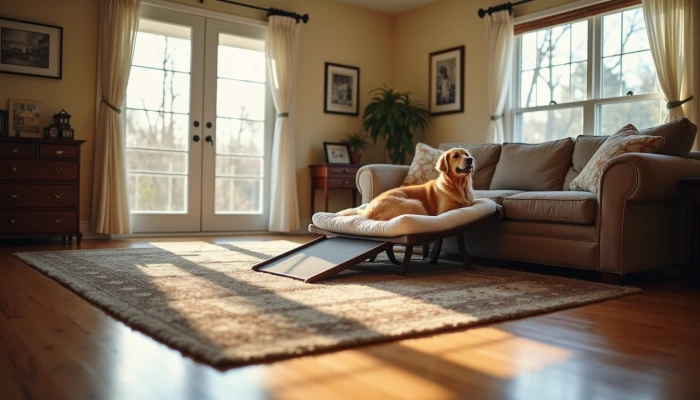
Next, reduce the need for jumping. If your pet regularly climbs onto a couch, bed, or into a car, a stable ramp may be easier on the joints than repeated lifting or jumping. You do not need to outfit every surface at once. Pick the one access point your pet uses most often.
Feeding setup also matters. Bowls placed where a pet has to brace awkwardly, stretch, or stand on slick flooring can add strain. Move bowls to a quiet, easy-to-reach area with good footing. If your veterinarian suggests a different bowl height for comfort, use that advice to guide your setup.
Here is a simple way to prioritize changes.
| Home issue | Lower-cost adjustment | Why it helps |
|---|---|---|
| Slipping on hard floors | Add rugs or non-slip mats | Improves traction on daily walking routes |
| Trouble reaching furniture or car | Use one sturdy ramp in the most-used location | Reduces repeated jumping and strain |
| Strain while eating or drinking | Reposition bowls in an easy-access area | Makes routine care less physically demanding |
| Difficulty reaching essentials | Move bed, bowls, and litter box closer together | Cuts down on unnecessary walking |
A few budget-minded habits can keep these changes practical.
- Fix one problem area before buying for the whole house
- Reuse household mats or runners if they are stable and easy to clean
- Rearrange furniture to create wider, clearer walking paths
- Keep essentials on one floor when possible
- Check that any ramp or mat stays se and does not shift
If a modification seems to increase fear, hesitation, or instability, pause and reassess. A cheaper solution is only useful if your pet can use it safely and consistently.
Budget-Friendly Exercise and Mobility Support
Older pets still need movement, but the routine usually works better when it is gentle, predictable, and adjusted to the pet's comfort level. The aim is to support mobility and muscle use without pushing through pain.
Short, steady activity is often more realistic than occasional long sessions. For dogs, that may mean slower walks with more frequent breaks. For cats, it may mean encouraging short bouts of movement between resting spots rather than expecting active play like they had when younger.
A simple daily sequence can help.
- Start with a calm rise from rest and a slow first walk across the room.
- Offer a short movement session at the time of day your pet seems most comfortable.
- Use easy, low-strain play or food motivation to encourage a little extra movement.
- Stop before your pet looks exhausted, sore, or frustrated.
If your veterinarian says it is appropriate, low-impact options such as gentle walking or supervised swimming may be useful for some pets. Not every pet has access to swimming, and not every pet enjoys it, so this should be treated as one possible option rather than a requirement.
You can also support movement through the home setup itself.
- Place resting spots close enough to reduce overexertion
- Encourage several short trips to water instead of one long trek
- Use toys that prompt reaching, stepping, or slow following without sudden twisting
- Keep nails trimmed through routine care so footing is easier
Community resources may also help with costs. Depending on your area, some veterinary clinics, shelters, trainers, or pet wellness programs may offer senior-focused guidance, classes, or referrals for mobility support. Availability varies, but it is worth asking before assuming every service must be private and expensive.
The key is consistency. A modest routine done most days is usually more practical than an ambitious plan that is hard to maintain.
Veterinary Guidance for Senior Pet Care
Home changes can improve daily comfort, but they work best alongside veterinary input. If your pet is showing new stiffness, falling, crying out, dragging limbs, avoiding the litter box, or suddenly refusing normal movement, a veterinarian should help assess the cause.
Veterinary guidance is important because mobility problems may involve pain, arthritis, muscle loss, neurologic change, weight issues, or another condition that needs a care plan. Your veterinarian can help you understand what kinds of movement are reasonable, what changes to monitor, and when a home setup needs to be adjusted.
A useful appointment checklist includes:
- What mobility changes have you noticed?
- When are they worst: morning, evening, after exercise, or all day?
- Where does your pet slip, hesitate, or avoid movement?
- Has appetite, litter box use, or bathroom routine changed?
- What home changes have you already tried?
This kind of detail helps turn vague concerns into a more practical plan.
Regular follow-up also matters. Senior pets can change quickly, and a setup that worked six months ago may no longer fit. Ongoing checkups help track comfort, function, and quality of life so you can make smaller adjustments before problems become bigger disruptions.
Some owners also want to understand the financial side of care. This is where pet insurance explained in plain terms can help: coverage for older pets may be more limited or more expensive, and pre-existing conditions are often an important factor. If you are asking is pet insurance worth it, the answer depends on your pet's age, health history, and what future costs you are trying to prepare for. A veterinarian or insurer can explain how timing and eligibility may affect your options, but it is wise not to assume a current mobility issue will be covered.
For families focused on senior dog care or senior cat support, the most helpful approach is usually a combined one: veterinary monitoring, realistic home changes, and a routine you can afford to keep up.
Conclusion
A supportive routine for a senior pet with mobility challenges does not have to begin with a major shopping list. In many homes, the best first steps are better traction, easier access to essentials, shorter and gentler movement sessions, and a clearer picture of what your pet struggles with most.
That practical approach works best when paired with regular veterinary care. Home adaptations can reduce strain and improve daily comfort, but they should support professional guidance, not replace it.
If you are unsure where to start, choose one daily problem to solve this week. Make the path to water safer. Reduce one jump. Move one resource closer. Small, thoughtful changes are often the foundation of sustainable senior pet care.