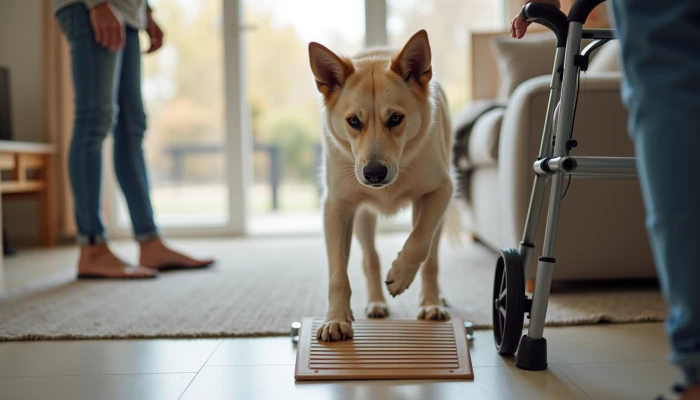
How to Notice Early Mobility Changes in an Older Pet at Home
Mobility problems in older pets do not always start with an obvious limp. More often, the first signs show up in everyday routines: a slower rise after a nap, hesitation before stairs, less interest in play, or a pet that seems a little less comfortable doing normal things.
That can make early changes easy to miss. Many pet owners assume a pet is "just slowing down," when the real issue may be discomfort, weakness, balance changes, or another age-related problem that deserves attention.
The good news is that you do not need special veterinary tools to notice useful patterns at home. Careful observation, simple tracking, and a few practical adjustments can help you spot changes earlier and support better senior pet care.
This guide focuses on what you can watch for, how to monitor changes without being invasive, and when home observation should lead to a veterinary visit. It does not replace professional care or try to diagnose the cause of mobility decline.
Observable Behavioral Changes in Senior Pets
Early mobility changes often appear as behavior changes before they look like a major physical problem. Research and veterinary guidance on senior cats especially note slower movement after rest, stiffness, reduced activity, and avoidance of once-normal activities.
Look first at transitions. A pet that used to stand up quickly may now take a moment to gather themselves, stretch longer, or move stiffly after sleeping. That does not confirm joint disease or any single diagnosis, but it is a meaningful change worth tracking.
You may also notice reluctance around routine movements. Common examples include hesitation before:
- jumping onto furniture
- climbing stairs
- getting into the litter box
- hopping into the car
- using scratching posts or favorite perches
- going out for walks or play
Some pets do not stop these activities completely. Instead, they do them less often, more slowly, or with a visible pause first. That "micro-hesitation" can be one of the earliest signs owners notice.
Changes in grooming and posture can matter too. Cats may groom less if twisting or reaching is uncomfortable. Dogs and cats may sit or lie down more carefully, shift positions often, or choose easier resting spots that require less climbing.
Behavior around family can change as well. A pet in low-grade discomfort may become more withdrawn, sleep more, play less, or seem irritable when picked up or touched in certain ways. Senior cat behavior sources also describe changes in sleep-wake patterns and social interaction that can overlap with physical decline.
A useful rule is to focus less on one isolated moment and more on repeated changes in normal habits. Ask yourself:
- Is my pet doing this less often than before?
- Does movement look slower after rest?
- Are favorite activities being avoided?
- Has social behavior changed along with movement?
If the answer is yes over days or weeks, that is a strong reason to document what you are seeing and discuss it with your veterinarian.
Non-Invasive Monitoring Techniques for Home Care
Home monitoring works best when it is simple enough to keep doing. You are not trying to measure your pet like a clinic would. You are trying to notice patterns clearly enough that changes are harder to dismiss.
Start with daily function. Pick a few routine activities your pet does often and watch those consistently for one to two weeks.
A simple home checklist can include:
- getting up after rest
- walking across the room
- climbing stairs
- getting into bed or onto furniture
- interest in walks or play
- grooming habits
- ease of using the litter box
- willingness to follow family members around
It helps to keep notes in the same format each day. Short observations are enough, such as "slow to rise in morning" or "stopped halfway on stairs."
You can also use a simple comparison table like this.
| Routine activity | What to watch for | Why it matters |
|---|---|---|
| Rising after sleep | stiffness, delay, stretching longer than usual | can reveal discomfort after rest |
| Walking | shorter stride, wobble, uneven pace, head bobbing | may show balance or limb-loading changes |
| Jumping or climbing | hesitation, refusal, using alternate route | often appears before obvious limping |
| Play or walks | shorter sessions, early fatigue, less enthusiasm | can reflect reduced comfort or endurance |
| Grooming | less grooming, messy coat in hard-to-reach areas | may suggest reduced flexibility |
| Body condition | weight gain, weight loss, visible muscle loss | body changes can affect mobility and may precede more obvious decline |
Video can be especially useful. A short clip of your pet walking, turning, getting up, or using stairs gives you a better baseline than memory alone. It can also help a veterinarian see what you mean if the problem does not show up clearly during an office visit.
When watching gait and posture, look for broad signs rather than trying to label them medically.
Examples include:
- favoring one side
- standing with a hunched or guarded posture
- slipping more often on smooth floors
- difficulty turning tightly
- hind-end weakness or reduced push-off
- visible loss of muscle over time
Weight and muscle changes deserve attention too. Senior wellness guidance commonly recommends regular weight monitoring, and some evidence suggests muscle loss can show up before more obvious mobility problems. You do not need a perfect body composition assessment at home. Instead, watch for practical signs such as looser hips, a thinner back end, or a pet that feels bony in some places while becoming less active overall.
The goal of monitoring is not to prove what is wrong. It is to create a clearer picture of what has changed, how often it happens, and whether it is getting worse.
Early Intervention Strategies for Senior Pet Mobility
If you are noticing early changes, the most helpful next step is usually to reduce strain while gathering better observations. Early support can improve day-to-day comfort and may help preserve quality of life, but it should stay within safe, practical limits.
Start by adjusting activity, not stopping it completely unless a veterinarian tells you to. Many senior pets do better with shorter, more frequent movement sessions rather than long bursts of activity.
That might mean:
- shorter walks with more sniffing breaks
- gentler play sessions for cats
- fewer high-impact jumps
- more predictable daily routines
- rest periods after activity
The home setup matters too. Small environmental changes can make movement easier without turning your home into a medical space.
Consider:
- reducing slippery walking surfaces where possible
- keeping food, water, and rest areas easy to reach
- limiting the need to climb for essentials
- placing litter boxes in accessible locations
- reducing obstacles in common walking paths
These changes do not treat the underlying cause, but they can lower the effort required for daily movement.
It is also smart to build a basic response plan as part of your pet wellness plan. Use a simple sequence.
- Notice a repeated change in movement or behavior.
- Track it for several days with notes or video.
- Make low-risk home adjustments to reduce strain.
- Schedule a veterinary visit if the change persists, progresses, or affects daily function.
Some signs should move that veterinary step up sooner. Contact a veterinarian promptly if you notice:
- sudden refusal to bear weight
- crying out or obvious distress with movement
- repeated falls or collapse
- major change in litter box use linked to movement difficulty
- rapid decline over a short period
- loss of appetite or major behavior change along with mobility issues
This is also where budgeting and planning can matter. If a pet is entering the senior years, it may be worth reviewing what routine exams, follow-up visits, and imaging could mean for your household. That is one place where broader insurance literacy can help. For readers looking into pet insurance explained resources, the practical question is not whether a policy solves mobility problems, but whether you understand what kinds of senior care costs may or may not be covered.
Most importantly, do not wait for a dramatic limp before asking for help. In both senior dog care and senior cat care, earlier conversations tend to be more useful than later ones because they start from a clearer picture of your pet's normal baseline and recent changes.
Conclusion
Early mobility decline in older pets is often subtle. A slower rise after rest, less jumping, reduced grooming, shorter walks, or more withdrawal can all be signs that something has changed.
By watching daily routines, keeping simple notes, and making low-risk home adjustments, you can spot patterns earlier and respond more thoughtfully. That kind of observation is a practical part of senior pet care, especially for families trying to make calm, informed decisions.
What home monitoring cannot do is tell you the exact cause. If changes persist, worsen, or interfere with normal life, a veterinary evaluation is the right next step. The best approach is a combination of careful observation at home and timely professional guidance.